Bio-identical Hormone Replacement Therapy an Alternative to HRT


We treat a wide range of symptoms at Thrive Medical and frequently use a blended functional medicine approach in exploring and restoring function to the body.  Often women don’t understand what is happening in their bodies at different stages in their lives.  Symptoms can be confusing, and assumptions to their cause often wrong.  Did you know that maladaptive stress response can mimic symptoms of peri-menopause?  We believe in helping to provide the knowledge and guidance necessary to educate and empower our clients to take control of their health and their lives. This makes it easier for them to regain their health, energy, and confidence to make informed decisions.

Our hormones influence all areas of the body, from the brain to the heart, and the balance of these hormones is vitally important to maintaining optimal health.

Here at Thrive Medical one of the methods we use to correct hormonal imbalances and replenish the hormones that deplete as we age is Bioidentical Hormone Replacement Therapy. If required, Bio-identical hormones can be very effective at enhancing quality of life, slowing down ageing and improving wellbeing.

Bioidentical HRT is an alternative to HRT, which uses bioidentical hormones to treat hormonal conditions in both men and women. It is most commonly used to treat symptoms of:

  • Perimenopause
  • Menopause
  • Pre-menstrual syndrome (PMS)
  • Depression
  • Endometriosis
  • Thyroid dysfunction
  • Andropause

Bio-Identical hormones are natural hormones that are made from plants, they have the same chemical structure as our own hormones and therefore they behave in the same way in the body.  There are a variety of hormone related conditions and as we age, our hormones also change.  Hormonal imbalance can cause a number of health issues. For some the symptoms are mild, but for others they are life changing and could go on for years if left untreated.

What are the Benefits of Natural Hormone Replacement Therapy?

Natural hormones are a direct replica of our own hormones and when used as a key aspect in hormone replacement therapy, patients can use them as a powerful tool to fight against the symptoms of a hormone imbalance. These natural hormones can slow the ageing process and improve your overall health. If you are experiencing hormonal acne, hot flushes, night sweats, insomnia, mood swings, fatigue, poor libido or lack of concentration, hormones could help you take back control regaining that youthful vitality in the process.

There is understandably some confusion around Hormone Replacement Therapy, given its long and sometimes controversial history.

What is the difference between Bio-identical Hormones and Body Identical Hormones?

Both body identical and bioidentical hormones are made with the same ‘ingredients’ – hormones extracted from natural sources that are identical in chemical and molecular structure to those occurring naturally in the human body – but there are differences between the two including the manufacturing process.

Body identical hormones are produced by large pharmaceutical companies in regulated, set doses and application methods. This one-size-fits-all approach works for some patients, but body identical hormones cannot be altered to cater to those with more specific needs.

Bioidentical hormones are produced by compounding pharmacies. This means that the pharmacy is able to prepare custom doses and application methods to address the individual needs of a patient.

What are the benefits of Bio-identical Hormones?

Bioidentical hormones can be very beneficial for patients who are experiencing a hormone imbalance and are looking for treatment. It can be used to treat hormone-related  conditions such as:

  • Perimenopause
  • Menopause
  • Pre-menstrual syndrome (PMS)
  • Depression
  • Endometriosis
  • Thyroid dysfunction
  • Andropause

It can also be used as an alternative for those who have tried synthetic hormone treatments, such as HRT, but experienced unwanted effects as a result.

Are Bio-identical Hormones Safe?

We are often asked about the safety of bioidentical hormones, particularly whether bioidentical hormones are safer than the synthetic versions commonly used in HRT. There have been many studies on bioidentical hormones; however, as they are officially not drugs they don’t require expensive, large-scale trials.

The clinical data available certainly suggests that bioidenticals are safer. For example, long running research which studied 80,000 post-menopausal women found that taking progesterone plus natural estrogen had no raised risk of heart disease or cancer. HRT had been licenced on the basis of favourable trial results for years before this WHI study.

Those who took only estrogen had a 29% rise in their risk of breast cancer. But for those on progesterone as well the cancer risk disappeared. Combining estrogen with various non- identical progestins, however, pushed up the risk by as much as 69%.

In our experience, many women prefer bioidentical hormones as they feel much better on them and don’t experience the side effects associated with traditional HRT.

As part of ongoing treatment reviews, we require blood tests, mammograms and pelvic ultrasounds so we can keep a close eye on the effectiveness of treatment and any potential side effects.

Another concern that some have about the safety of bioidentical hormones relates to the dosage. Critics of BHRT say these labs can get the doses wrong or sell contaminated batches of hormones. But each patient’s bioidentical hormones must be prescribed by a qualified prescriber and is made in a lab known as a compounding pharmacy. These compounding facilities are often used by hospitals and are providing a range of drugs for medical professionals all the time. They are tightly regulated and overseen by the General Pharmaceutical Council and the Medicines and Healthcare products Regulatory Agency (MHRA).

Will I benefit from Bio-identical Hormone Replacement Therapy (BHRT)?

Bioidentical hormones can be effective for both men and women at reducing the symptoms caused by hormonal imbalance. We will carry out a thorough consultation process along with necessary functional testing to explore your suitability for this treatment.

How is BHRT used?

Before BHRT can be prescribed, you’ll be seen by your clinical expert, who will carry out a comprehensive consultation to gather all necessary information about your symptoms, medical history, and any test results. Any treatment will be tailored to your individual needs as one size does not fit all. BHRT medication is usually prescribed as a lozenge or cream, formulated to your personal requirements. Any treatment plan with us will include regular follow ups and ongoing monitoring to help achieve optimum results.

How long will I have to be on BHRT for?

Many women are concerned they will need to be on BHRT for the rest of their life. As the hormone therapy we provide is completely tailored to you, the duration of any treatment will be specific to you and your needs. Some will experience symptoms for just a few months whilst others may experience symptoms for years. We will provide treatment for as long as you have the symptoms and as long as it continues to improve your wellbeing.

The Patient Journey

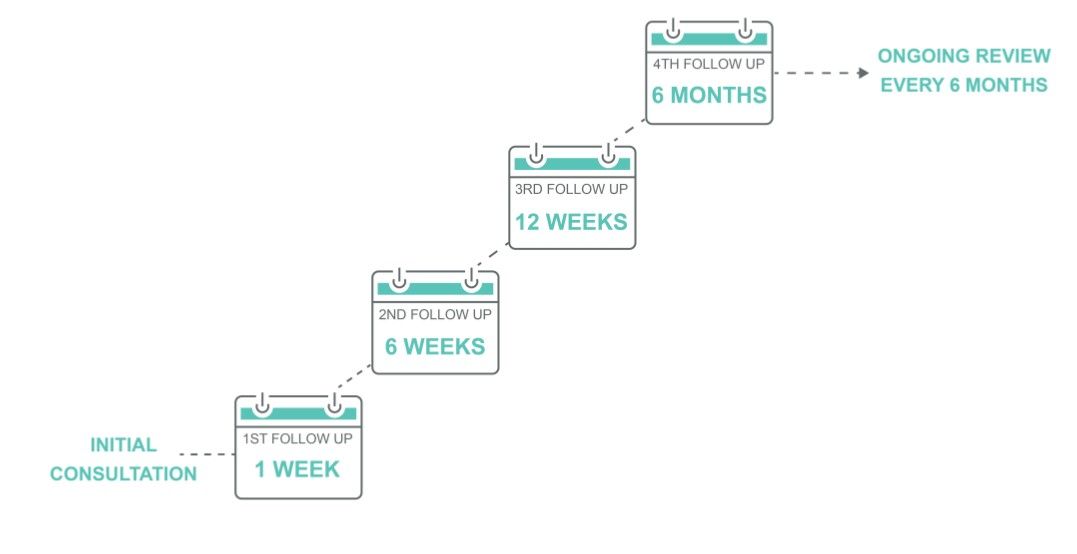
The diagram below illustrates a typical treatment plan.  Our clinical expert will work with closely with you to ensure your treatment plan is effective.

​

When your hormones work in harmony, you look and feel your best. Hormone replacement therapy can offer many positive effects for those experiencing issues relating to hormonal imbalance.

During your consultation, we will review your medical history in detail, assess your symptoms, explore current health and lifestyle habits and discuss options that may benefit you.

Blood tests and a baseline pelvic ultrasound can then be arranged accordingly, if necessary.

Following review of blood tests.  You will receive a bespoke programme on the types of hormone replacement therapy that may benefit you, including a plan to increase your overall health with a focus on diet, supplements and lifestyle advice.

The programme will be reviewed regularly, and once settled on a programme follow ups are every six months.     

Hormone Testing

A combination of blood testing may be required. Required health tests and associated costs will be discussed within the consultation. 

WHAT IS MENOPAUSE AND HOW CAN BHRT HELP?

MENOPAUSE

Menopause may be a natural part of ageing but that doesn’t mean that it has to affect your quality of life. At Thrive Medical Clinic we use hormone balancing to provide menopause treatment to support women whose lives have been impacted by hormonal imbalance.

All our services are provided remotely or in person – from consultations to prescriptions – giving you a seamless experience with the utmost convenience. We take a holistic approach, taking into account everything from hormones and lifestyle to nutrition to help you feel better so you focus on enjoying life.

If your menopause symptoms are disrupting your life, don’t wait to seek help. Call us on 01423 313 099 or email us at info@thrive-medical.co.uk  – will be in touch with you within 24 hours, you can also book online at www.thrive-medical.co.uk.

In a survey by Women’s Health Concern, 95% of women said they would try alternative therapies before hormone replacement therapy (HRT) because they think they are more natural and because they are worried about health risks of HRT. We use bioidentical hormone replacement therapy (BHRT), an alternative to HRT, to achieve emotional and physical balance. Many women prefer bioidentical hormones as they feel much better on them and don’t experience the side effects associated with traditional HRT. Following a thorough consultation and blood tests, your clinician will create a bespoke treatment path tailored exclusively to your body’s needs. We respect what’s right for you as an individual, because there is no ‘one-size-fits-all’ approach to health.

Every woman is unique, and so are her hormones. You have your ‘own’ menopause and thus every hormone solution we provide is specifically designed for you.

WHAT IS MENOPAUSE?

Menopause is defined as the point in a woman’s life when she hasn’t had a period for 12 months. This is usually between the ages of 45 and 55. Around 1 in 100 women will experience early menopause, before the age of 40.

When a woman is in menopause the ovaries become inactive and as a result she is no longer able to bear children. At this point, the hormones in the body that are related to this function begin to diminish. However, there is still a vital, health-enhancing role for those reproductive hormones that now has nothing to do with reproduction and everything to do with maintaining good health. Hormone receptors are found on almost every organ in the body and are essential for our health and wellbeing.

Menopause is preceded by perimenopause, which is where the hormones begin to fluctuate and/or decline.

WHAT ARE THE SIGNS OF MENOPAUSE? HOW DO I KNOW IF I AM IN MENOPAUSE?

There are many signs of menopause and each woman will have a slightly different experience of these. Some will only experience a few mild symptoms, whereas others can have many symptoms that greatly impact on quality of life.

There are a number of menopause symptoms that you can look out for that signal your body’s hormonal fluctuations as the ovaries slowly lose their function. Symptoms are similar to those leading up to menopause, but with more consistency in:

  • Hot flushes (although some refer to these as hot flashes) and night sweats.
  • Difficulty sleeping (insomnia).
  • Changes in mood, such as feeling anxious, tired, irritable, or depressed.
  • Difficulty concentrating or poor memory.
  • Urinary problems – such as recurrent urinary tract infections, loss of bladder control (urinary incontinence).
  • Joint aches and pains.
  • Changes to the vagina, such as thinning, dryness, discomfort, itching and pain during sex
  • Loss of interest in sex (loss of libido).

HOW LONG DOES MENOPAUSE LAST?

Menopause is defined as the point in life when you’ve not had a period for 12 months. From here, you are in post-menopause. Once you’ve had your last period you can expect the symptoms of menopause to last for around four to five years as your hormones settle. The good news is that most women find some relief from this point onwards.

As you move through each phase of menopause, hormone levels can fluctuate significantly causing hormonal imbalance. However, these vital hormones, such as estrogen, progesterone and testosterone remain important for bones, vaginal and urethral health, skin, brain function and cardiovascular health. It is therefore important to effectively balance and replenish these hormones in order to maintain health, energy, mood and brain function.

Menopause may be something all women go through, but that doesn’t mean there is a ‘one size fits all’ treatment path. Every woman is unique, and so we provide bespoke menopause treatment, developed for your individual needs using bioidentical hormone therapy (BHRT). We carry out a thorough consultation, together with appropriate tests (via post), when symptoms begin displaying as this enables us to develop an effective treatment path. We look at the whole picture, including lifestyle factors, nutrition and family medical history.

BHRT can be used to balance your hormones and provide significant relief from symptoms experienced during the menopause, and other hormone-related conditions including premenstrual syndrome (PMS), postnatal depression, and endometriosis.

Traditional HRT uses synthetic hormones and their chemical structure is similar to, but not exactly the same as those produced by the body. These chemical differences can mean that synthetic hormones act differently in the body and can produce different effects. Bioidentical hormones are derived from diosgenin, which is sourced from Mexican yams. Although they are of course produced in a lab, unlike synthetic hormones, they are 100% identical in structure to our own hormones.

We see many women who have concerns about side effects of traditional HRT, and those who have tried synthetic hormone treatments but had unwanted side effects and as a result are looking for HRT alternatives. The side effects commonly associated with synthetic hormones typically aren’t experienced with bioidentical hormones, making them a popular choice.

We work closely with Specialist Pharmacy to seamlessly deliver your hormone prescriptions, which can come in different formats, from creams, to lozenges.

WHAT ARE THE BENEFITS OF BHRT?

In addition to relieving the symptoms of menopause, BHRT has many long term health benefits, especially if taken within a few years of becoming menopausal, including substantially reducing the risk of cardiovascular disease by up to 50%.

HOW LONG WILL I HAVE TO BE ON BHRT? WILL IT BE FOR THE REST OF MY LIFE?

Many women are concerned they will need to be on BHRT for the rest of their life. As the hormone therapy we provide is completely tailored, the duration of the treatment will be specific to you and your needs. Some women will experience menopausal symptoms for just a few months whereas others may experience symptoms for years. We will provide treatment for as long as you have the symptoms and as long as it continues to improve your wellbeing. At some point in time your body will decide that it can cope without treatment and then we make a joint decision with you to reduce and stop your treatment and see how you feel.

Book Your Consultation Today

Start your journey back to optimal health.

WHAT IS PERI-MENOPAUSE AND HOW CAN BHRT HELP?

The transition to menopause can feel like an emotional and physical rollercoaster, with perimenopause symptoms causing significant distress for many women. But there is no need to struggle alone with your symptoms. Thrive Medical can help you to look after your hormones so you can focus on living your best life.

We provide effective treatment for perimenopause symptoms using bioidentical HRT (BHRT) to replenish and balance depleted hormone levels which will help to control your hormones. Many women prefer bioidentical hormone balancing therapy as an alternative to HRT as they feel much better on them, and in our experience don’t get the side effects associated with traditional HRT.

Did you know?……

36%

of women say menopause symptoms impact their social life (1).

50%

of women report their menopause has impacted their sex life (2).

We believe that treatment should be as individual as you are, because there is no ‘one-size-fits-all’ approach to health. Taking into account your hormones, nutrition, and lifestyle, we will create a bespoke, comprehensive treatment path tailored precisely to your needs to achieve hormonal balance.

Your entire patient journey with us is catered for remotely or in person, including initial consultations, treatment reviews, blood tests, prescriptions and, of course, ongoing support. This allows you to benefit from exceptional care from the comfort of your own home if you choose the remote option.

If your quality of life has been impacted by perimenopause symptoms, please do seek help.

Call us on 01423 313099 telephone or email info@thrive-medical.co.uk.  Alternatively, you can book online and we will be in touch with you within 24 hours.

Perimenopause Symptoms & Treatment With Bioidentical HRT

By replenishing and balancing the vital hormones estrogen, progesterone and testosterone, we can maintain a woman’s health, energy, mood and brain function, helping her to feel like herself again.

 WHAT IS PERIMENOPAUSE? WHAT HAPPENS DURING PERIMENOPAUSE?

Perimenopause is the time in a woman’s life during which the ovaries slowly lose their function and the effects of hormonal change start to become evident as the body makes the natural transition to menopause. The reproductive hormones, most significantly estrogen and progesterone, start to decrease in preparation for menopause, when the effects solidify. If you are in perimenopause it is likely you will notice symptoms but will still have your period. Once you’ve had 12 months without a period, you’ve officially reached menopause.

WHAT IS THE NORMAL AGE FOR PERIMENOPAUSE?

The ‘normal’ age for perimenopause varies. Most will become aware of the transition when they reach their mid to late forties, but some women can begin to experience symptoms of perimenopause as early as the age of 35. Often the timing of this phase is similar to the time when a woman’s mother went through the same transition. That being said, the length of time and severity of menopause-related symptoms for any individual woman cannot be predicted, and every menopause is unique. Genetic and environmental factors are an important factor in determining when a woman may enter the menopause.

WHAT ARE THE SIGNS OF PERIMENOPAUSE?

Although some women will sail through perimenopause, many will experience symptoms ranging from mild to severe. Those who experience severe symptoms often find it impacts on quality of life. Signs of perimenopause are many and varied. No two women are exactly alike and no two women will have exactly the same perimenopause experience. Symptoms can include:

Irregular periods

Periods that are heavier or lighter than usual

Low libido

Mood swings

Anxiety

PMS

Fatigue

Hot flushes

Insomnia

Weight gain

Anger and irritability

Heart palpitations

Vaginal dryness

Memory loss

Night sweats

Dysfunctional uterine bleeding

Anaemia

Bloating

Fluid retention

Breast tenderness

Aches and painful joints

Frequent headaches

Urinary incontinence

Dry skin

WHAT IS PREMENOPAUSE?

You may also hear the term ‘premenopause’, which can last for 10 years or more. This refers to the whole period preceding menopause (encompassing perimenopause) where a woman will still have periods (irregular and regular) and is still considered to be in her reproductive years. During this time running up to perimenopause there is often no noticeable change, despite underlying hormone fluctuations. This premenopause stage encompasses the perimenopause stage, where symptoms become noticeable and ends one year after the last menstrual cycle – which is the official date of menopause.

HOW LONG DOES PERIMENOPAUSE LAST?

Some women may experience the perimenopause for just a few months but for the vast majority, symptoms will last for around 4 years. In some cases, they can be experienced for up to 10 years.

TREATMENT FOR PERIMENOPAUSE. HOW CAN I BALANCE MY HORMONES DURING PERIMENOPAUSE?

There’s no ‘one-size-fits-all’ treatment for perimenopause. As estrogen, progesterone and testosterone levels fluctuate during perimenopause this can result in hormonal imbalance. An optimal balance of hormones is vital to overall wellbeing including brain function, cardiovascular health, bones, vaginal and urethral health. We use bioidentical hormone replacement therapy (BHRT), an alternative to HRT, to replenish these hormones to your optimal levels in order to maintain health, energy, mood and brain function.

After your initial consultation over the phone or in person, we will arrange blood to determine your individual hormone levels. But we don’t just look at hormones – we take into account your blood tests, symptoms, lifestyle, nutrition, medical history and other factors to create a bespoke perimenopause treatment path designed for your specific needs.

We will schedule regular consultations to monitor your health and arrange appropriate prescriptions which can be purchased directly from our Specialist Pharmacy.

WHAT IS BIOIDENTICAL HORMONE REPLACEMENT THERAPY (BHRT)?

BHRT involves using custom compounded bioidentical hormones to relieve symptoms of hormonal imbalance. BHRT can not only be used to help provide relief from perimenopause and menopause symptoms, but it is also effective for other hormone-related conditions including endometriosis, premenstrual syndrome (PMS), and postnatal depression.

Where traditional HRT uses synthetic hormones with a chemical structure similar to, but not identical to those found in the body, BHRT uses bioidentical hormones that are sourced from Mexican yams and are chemically identical to those naturally found in the body.

Many of our patients come to us because they are looking for an alternative to HRT as they have concerns about the side effects. We also see many women who have previously tried synthetic hormone treatments but had unwanted side effects. In our experience, the side effects commonly associated with synthetic hormones aren’t experienced with bioidentical hormones, making them a popular choice.

We work closely with Specialist Pharmacy to seamlessly deliver your compounded hormone prescriptions, which can come in different formats, from creams to lozenges.

Book Your Consultation Today

Start your journey back to optimal health.

WHAT IS PRE-MENSTRUAL SYNDROME?

PRE-MENSTRUAL SYNDROME (PMS)

Pre-menstrual syndrome which is commonly referred to as PMS is extremely common and is the term to describe the physical and emotional symptoms that occur in the one to two weeks before a woman’s period/menstruation.

It is an incredibly common imbalance and usually relates to low levels of progesterone, the hormone which is produced in the second part of the cycle (post ovulation. When the balance of oestrogen and progesterone in this phase of ovulation is disturbed, this can cause physical and mood-related symptoms.

Who Experiences PMS?

Most women who have a menstrual cycle experience cyclical symptoms, such as painful breasts, bloating, headaches, fatigue, mood swings, irritability and increased appetite which can be easily managed. PMS symptoms are usually not very severe and most women cope well with them, however, for some women, these can be severe and impact how they go about their everyday lives. However, symptoms of PMS can often become more severe and begin to impact on the personal or professional lives of the woman suffering from these symptoms. The good news is that it is a totally treatable imbalance and so women don’t need to suffer from PMS.

WHY DIDN’T MY DOCTOR TELL ME ABOUT THIS TREATMENT?

Most doctors aren’t familiar with BHRT. Firstly, they don’t recognise hormonal imbalances as a disease. Secondly, pharmaceutical companies conduct doctors’ further education, and as BHRT cannot be sold ‘off the shelf’ it remains off their radar. Usually doctors learn about BHRT from their patients. It’s important to create demand for such a successful treatment and encourage your doctor to learn more about how you have benefited from BHRT.

DO I HAVE TO BE ON THIS TREATMENT FOR LIFE?

No, BHRT is individually tailored. The decision to stay on treatment or complete treatment will be made between the patient and medical practitioner. There are no set rules. However, if you are reaping the benefits and the quality of your life is noticeably improved, we don’t see a reason for you to stop the treatment, subject to annual review.

WHEN IS MENOPAUSE OVER?

By definition, one year after your last period is the beginning of your menopause, and it continues until the end of your life. However, menopausal symptoms can last on average between two and six years, and some women experience menopausal symptoms continuously.

HOW QUICKLY WILL I SEE RESULTS FROM THIS TREATMENT?

Treatment is often surprisingly immediate, but generally results are seen between three to six weeks. Mostly, patients can see significant improvements after six weeks. Sometimes it takes more than a single cycle for the treatment to take effect. If the hormonal balance is severe, and the woman is still on a cycle, it can take three to four months to experience the desired improvement.

CAN BIO-IDENTICAL HORMONES SLOW THE AGEING PROCESS?

Yes. Bio-identical hormones can help with multiple effects of aging. Skin changes, especially loss of elasticity and dryness, worsening cognition and memory, organisational skills, reduced energy and sexual function all occur as our hormones decline. Balancing the hormones can prevent some of these effects and possibly prevent certain conditions from developing, such as osteoporosis.

HOW LONG HAS BHRT BEEN AROUND?

It was discovered in the 1940s.

ARE ALL THE HORMONES YOU PRESCRIBE NATURAL?

In the case of the hormones we use, the word ‘natural’ is used to describe the hormone molecules, which are produced from natural plant sources. The chemical structure is 100% the same as that of the naturally occurring hormones produced by your body. This means their effects are more consistent with the normal biochemistry of your body than those of synthetic hormones.

WHERE TO BIO-IDENTICAL HORMONES COME FROM?

These bioidentical hormones are converted from plant sources (diosgenin from wild yam or betasitosterol from soya beans) and manufactured into powder form. They are then compounded into a number of different formulations. There is growing public demand for hormones that are obtained from plant sources and are bio-identical.

WHATE ARE THE SIDE EFFECTS?

There are no side effects if the hormones are given in doses that are appropriate to patient needs, as they are part of our physiology. However, high levels of estrogen can cause breast tenderness and bleeding. High levels of progesterone can cause tiredness and depression. To prevent any of these side effects, we always start off on the lowest possible dosages.

HOW MUCH WILL MEDICATION COST?

A private prescription for daily doses per hormone will cost between £1-£3 per day. That’s less that a cup of coffee a day.

HOW LONG IS A PRESCRIPTION VALID FOR?

A prescription is valid for 12 months from its date of issue. Prescriptions containing testosterone or DHEA must be ordered within 28 days of the prescription being issued.

WHERE DO I GET MY BHRT FROM?

There are no over-the-counter prescriptions. Each prescription is individually compounded and made up to your exact dosage requirements as per your medical practitioner’s prescription. In the UK, the medications are available and can be dispensed from specialist compounding pharmacies including the Specialist Pharmacy.

CAN I TELL MY GP ABOUT THIS TREATMENT?

Yes, of course. As medical professionals we are happy to write to your GP.

DO MEN NEED HORMONES TO?

Yes, we all do. Hormones regulate every function in our body, whether we are male or female. However, men are often reluctant to seek help with hormonal issues, and go through the andropause (the male menopause) which usually also presents a series of symptoms unique to every man.

I HAVE A HISTORY OF CANCER. CAN I RECEIVE BHRT TREATMENT?

Possibly, however this needs to be discussed with your oncologist and GP, and you would be recommended to receive treatment at a specialist clinic.

Mini Cart 0

Your cart is empty.

Thrive Medical Logo